
Paramount–WBD Cleared to Close: What the Merger Means for the Entertainment Industry
TORONTO, ON –
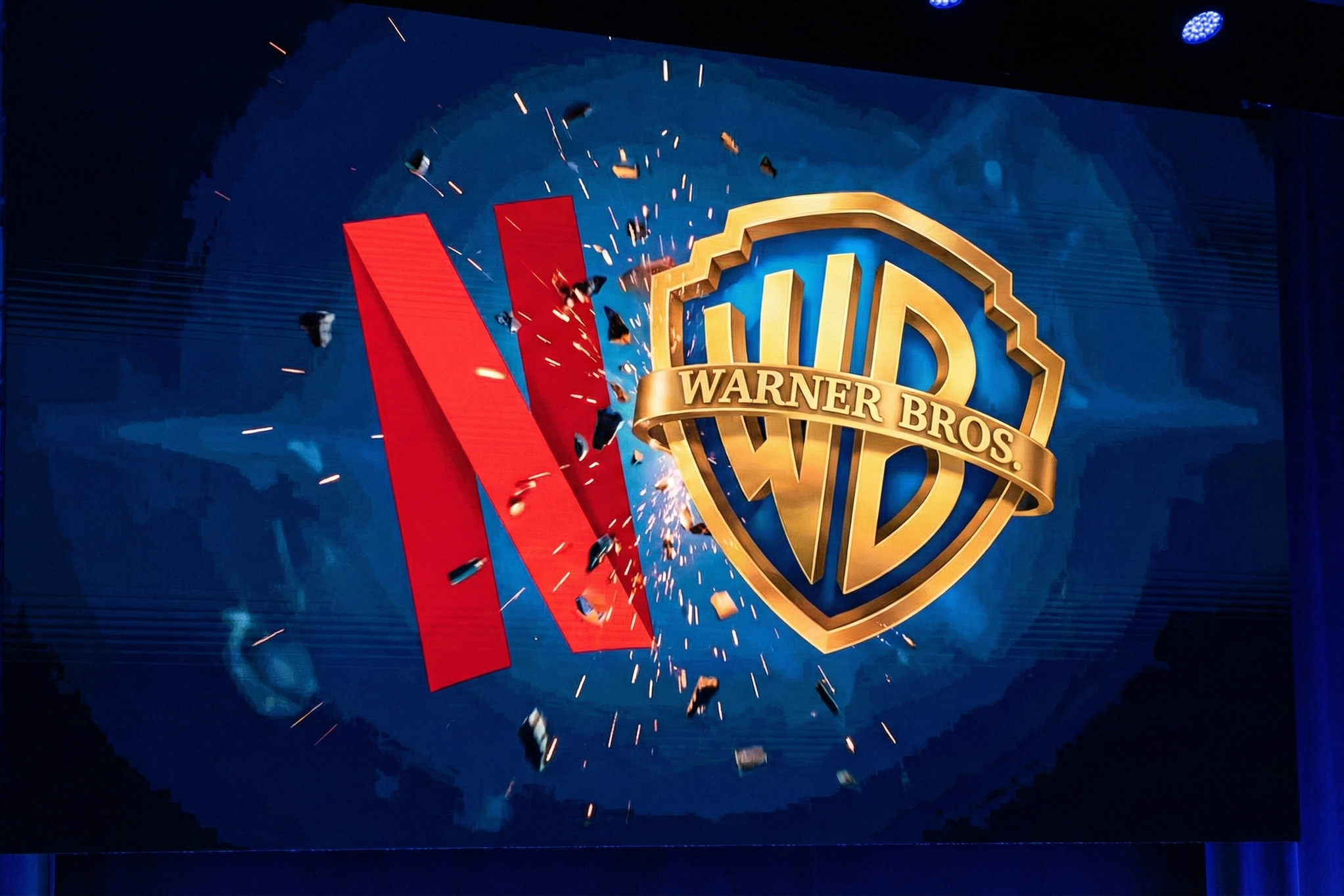
Paramount Skydance’s acquisition of Warner Bros. Discovery has cleared its major legal hurdle.
On September 21, 2026, Paramount and WBD settled the antitrust litigation brought by California and 11 other states. The settlement dissolved the “No-Close Order” that had prevented the companies from completing the transaction, allowing the approximately $110 billion merger to move toward closing, subject to remaining formalities and compliance obligations.
For Hollywood and the entertainment industry as a whole, the story is not simply that another major media deal has survived merger scrutiny. The settlement places enforceable conditions around film production, theatrical releases, cable distribution, labour, studio infrastructure, and independent filmmaking.
The next question is whether those commitments will meaningfully protect competition and creative opportunity in an increasingly concentrated market.
Editorial note
The settlement terms reported above are based on the joint motion and publicly reported summaries available as of September 23, 2026. The merger’s practical effects will depend on the final court order, the companies’ implementation of the commitments, and the willingness of regulators, unions, workers, creators, and affected businesses to enforce the rights and protections available to them. This article is general information, not legal advice.
The legal hurdle has cleared, but conditions remain
Importantly, regulatory clearance is not the same as regulatory approval in the ordinary sense.
The settlement does not mean regulators concluded that consolidation poses no risk or that state attorneys general endorsed the merger. It means that the transaction can proceed subject to legally enforceable conditions intended to protect competition, workers, domestic film production, theatres, consumers, and editorial independence.
It reflects a negotiated outcome: the merger can proceed, but Paramount must operate within a detailed set of commitments intended to address concerns about reduced competition, reduced production, weaker bargaining power, and the effects of combining major entertainment and distribution assets.
For creators, writers, producers, performers, filmmakers, journalists, and entertainment businesses, the important question is no longer whether the merger will happen. It is what obligations will govern the merged company—and whether those obligations will meaningfully constrain the power that consolidation creates.

Behavioural remedy
n. — /bɪˈheɪ.vjər.əl ˈrɛm.ə.di/ —
A legally enforceable obligation requiring a merged company to follow specified conduct, rather than requiring it to sell assets.
What the settlement requires
The settlement imposes a series of behavioural commitments, reporting obligations, monitoring mechanisms, and potential remedies.
The production commitments
The settlement turns part of Paramount’s production strategy into a legal obligation.
For the first two years, the merged company must release at least 30 theatrical films annually. That requirement rises to 32 films annually for the following three years. The annual slate must also include at least four independent films and a minimum percentage of blockbuster or “tentpole” releases.
Paramount must spend at least $300 million more each year on domestic film production compared with 2025 levels, creating a minimum five-year commitment of approximately $1.5 billion. The settlement also requires an annual independent film fund dedicated to acquiring titles from independent filmmakers.
For a business that has frequently treated theatrical slates as a variable cost, that matters. These commitments convert production promises into enforceable obligations. If the company falls short of the applicable annual film quota, it may face a $30 million penalty for each missing film.
According to the reported settlement terms, the funds would be directed to entertainment-industry labour trusts, a California film and television fund, and antitrust enforcement.
These commitments are also significant because they respond to the concern that consolidation would lead to fewer films, shorter theatrical windows, reduced risk-taking, and greater reliance on a smaller number of commercially predictable projects. But while these commitments create a measurable floor for theatrical output, they do not dictate the quality of the projects, the marketing behind them, or the economic terms offered to the people who create them.
In short, there is guarantee that every film will receive meaningful marketing support, a particular theatrical window, a sequel, or a fair licensing deal. A production quota can increase volume without necessarily increasing creative control or economic value for the people who make the work.
Theatre and independent-film implications
The settlement includes protections concerning pricing and distribution terms offered to theatre operators, including restrictions on certain fees for a defined period. It also requires an independent film fund and a minimum number of independent releases.
Independent filmmakers should welcome a commitment to acquire and release more independent work, while remaining clear-eyed about what a nominal release does not guarantee. A film can be released without receiving meaningful marketing, a viable theatrical window, transparent accounting, or sufficient audience discovery.
Those measures could create more room for independent films in a market increasingly shaped by platform economics. However, independent filmmakers should still examine distribution agreements carefully.
A theatrical release commitment may not determine:
The size or duration of the release.
The marketing budget.
The number of screens.
The geographic scope.
The treatment of ancillary rights.
The availability of performance data.
The distributor’s ability to change release plans.
The filmmaker’s ability to audit receipts.
The deal may create more openings, but that does not replace careful negotiation over rights, reporting, recoupment, marketing commitments, and audit access. Independent film is not protected merely because a title is technically released. Visibility, discoverability, marketing, and transparent accounting remain central to whether the release creates value.
Cable distribution and information firewalls
For five years after closing, Paramount and WBD must negotiate distribution and carriage arrangements for their respective basic cable channels independently. The settlement also restricts the sharing or use of confidential licensing and affiliate information between the legacy businesses.
This is a practical form of behavioural relief. Rather than requiring an immediate structural breakup, the settlement attempts to prevent the combined company from using sensitive information from one legacy business to strengthen its negotiating position in another.
The effectiveness of these protections will depend on implementation. Information firewalls are only as useful as their scope, internal controls, compliance systems, and consequences for breach. The appointment of an independent monitoring trustee, an internal compliance monitor, and a multi-state oversight committee is intended to make those obligations more than aspirational.
Labour, studio lots, and consolidation
The settlement requires the merged company to honour existing collective bargaining agreements and negotiate in good faith with entertainment-industry unions. It also requires the company to maintain both legacy studio lots and to allocate approximately $9.5 million annually toward workforce development, training, educational film programs, and community arts organizations.
For workers, preserving facilities may matter as much as preserving corporate names. Studio lots support employment ecosystems that include actors, writers, directors, producers, editors, designers, craftspeople, technicians, vendors, and small businesses.
These are meaningful protections, particularly in an industry where consolidation often brings cost-cutting, reorganizations, and uncertainty for workers. But they are not a blanket prohibition on layoffs, restructurings, or changes in commissioning strategy. Workers and representatives will still need to assess how the combined company applies its commitments in practice.
The settlement does not eliminate ordinary merger risks. Corporate overlap can still produce redundancies, reorganizations, changes in commissioning practices, and reduced bargaining leverage. Existing collective agreements may protect workers in particular respects, but they do not guarantee that every department, platform, brand, or production line will remain unchanged.
Practical lessons for creators
Fewer buyers, more leverage
The merged company will be a major buyer and distributor of creative work. That can create opportunities, but it can also make negotiations more difficult. When fewer companies control more production and distribution capacity, creators may have fewer realistic alternatives.
A creator can technically decline a deal, but the practical value of that choice depends on whether another buyer is available, whether the project can be financed elsewhere, and whether the creator can afford to wait. This is why creators should treat contracts as business infrastructure, not paperwork at the end of a deal.
It’s important to keep in mind that a larger company may offer greater reach. It may also seek broader rights, longer terms, stronger exclusivity, and more discretion over how content is altered, packaged, marketed, or removed.
More content does not automatically mean better terms
The settlement’s film quotas could increase production activity. That may benefit writers, directors, performers, crews, vendors, theatres, and independent producers. But output volume alone is not enough. A company can satisfy a numerical release obligation while still concentrating value in a small number of owners and executives. For creators, the real issue is not simply how many projects are made. It is how the economic and control rights are allocated across the people who make them.
Artificial intelligence and creative labour
The settlement’s focus on “real” film production and domestic employment also sits within a broader debate about artificial intelligence. As generative tools become more capable, production commitments will raise difficult questions about what counts as a film, whose labour is required, and whether AI-generated or AI-assisted content can satisfy contractual or regulatory obligations.
For creators and production companies, contracts should now address AI expressly. The Paramount–WBD settlement make this issue harder to avoid.
Contractual protections still reign supreme
The Paramount–WBD merger illustrates a broader reality of the entertainment economy: ownership changes can alter negotiating power even when the creator’s contract does not immediately change.
Creators, producers, agencies, and entertainment businesses should monitor:
Broader grants of rights across platforms, territories, formats, and future uses.
Longer exclusivity provisions and holdback periods.
Reduced leverage where fewer buyers control more distribution.
Content-removal, shelving, and reversion provisions.
Accounting, reporting, and audit rights.
AI use, training-data permissions, synthetic-performance rights, and consent.
New commissioning, licensing, and payment processes after integration.
The most valuable protections are usually secured before the project is made, licensed, or distributed. Once content is delivered and rights are broadly granted, leverage often shifts.
That is the commercial lesson beneath this prolonged merger-control debate. Competition law can shape the market, but a well-drafted agreement still determines what one creator, producer, or rights-holder can actually do.
Conclusion
The Paramount–WBD merger is now moving from legal challenge to commercial implementation. Its impact will not be measured only by whether the company releases enough films to satisfy a settlement. It will be measured by who receives opportunities, who retains rights, who can negotiate, and whether the industry remains capable of supporting work that is not designed solely for the largest possible audience.
The deal is therefore more than a corporate combination. It is also a test of whether behavioural remedies can meaningfully constrain concentrated power in an industry where entertainment, technology, politics, and public information increasingly overlap.
For the entertainment industry, the next chapter will be measured not only by the size of the combined company, but by what it produces, who gets paid, who retains control, how independent voices are protected, and whether the settlement’s promises can be enforced in practice.
What’s ahead
Our next article will break down the political reactions to this news, assess the settlement’s editorial-independence safeguards (and limitations), and why media ownership is a public-interest issue even where a merger satisfies competition-law requirements.
Your creative work is your leverage.
Need help understanding the intricate contracts that govern your creative work, or want to build a strategy for IP protection? Diverge Legal is here to help.
Read these next




More about DIVERGE
Diverge is not just a legal service provider. We’re your partner in building a legally sound and sustainable content creation business. We understand the unique challenges creators face and offer tailored solutions to protect your intellectual property, ensure regulatory compliance, and minimize legal risks.
Whether you’re an established influencer or an emerging creator, Diverge is here to help you focus on what you do best, while we take care of the legal complexities.
Reach out to Diverge today to learn more about how we can support your content creation journey.
Follow us social media or sign up to our newsletter below for more tips on protecting your creative rights and thriving in the creator economy.
Important Notice: The information in this article is provided for general informational purposes only and is not intended as legal advice. Reading this content does not create a lawyer-client relationship. Always seek professional legal counsel tailored to your specific situation. No part of this article may be reproduced or transmitted, in any form or by any means, electronic, mechanical, photocopying, recording or otherwise, or stored in any retrieval system of any nature, without the express written permission of Diverge Legal.
