
Netflix-WBD Under Fire: Paramount’s Letter to U.S. Lawmakers (Part IV)
TORONTO, ON –
Nearly a month after Warner Bros. Discovery (WBD) doubled down on its Netflix merger and rejected Paramount Skydance’s $108.4 billion hostile bid, the battle continues…
Paramount’s chief legal officer has written directly to US lawmakers, calling the Netflix-WBD deal “presumptively unlawful” under antitrust law and warning it would cement Netflix’s supremacy in streaming.
For creators and talent, and IP holders, this escalation means we can expect longer uncertainty, tougher negotiations, and fewer real buyers for premium content while regulators, politicians, and boards slug it out.
On the legal side, the focus sharpens on the antitrust realities, how regulators define markets, measure dominance, and protect competition in commissioning and distribution.
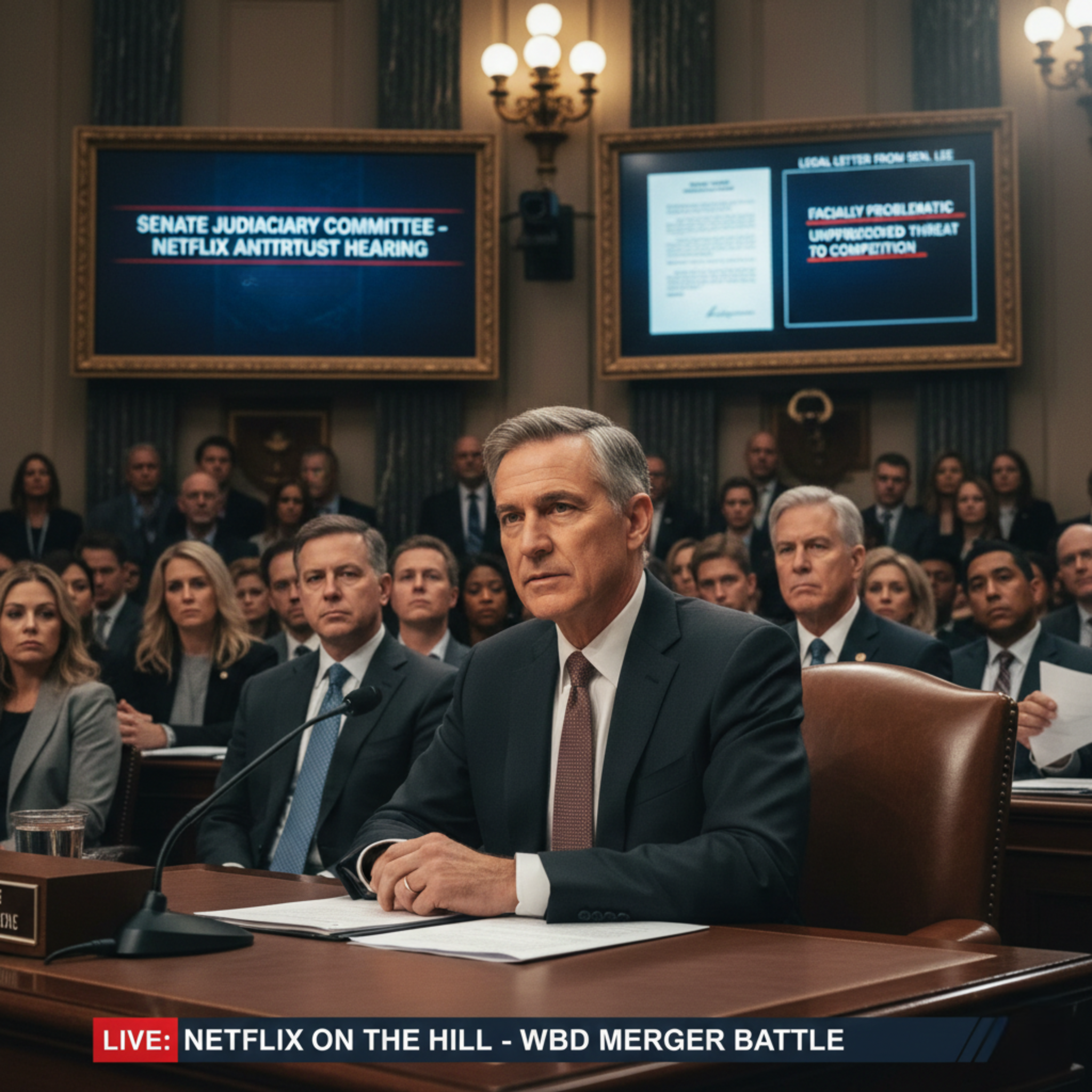
Presumptively Unlawful
/prēˈzəm(p)tivˈli/ /ˌənˈlôf(ə)l/ (adj.p)
Mergers so likely to harm competition (e.g., extreme market share) that they face a heavy burden to prove otherwise.Parts 1–3
Part 1 broke down the Netflix-WBD “spin‑merge” structure: Netflix buys WBD’s studios and HBO Max for $82.7 billion ($27.75/share cash + stock), spinning off CNN and cable into a shareholder stub company (holding corp for the remaining equity after a major distribution).
Part 2 covered Paramount’s hostile $30/share all‑cash bid for the whole company, sparking Revlon‑duty questions for WBD’s board.
Part 3 unpacked WBD’s rejection of Paramount’s bid, Ted Sarandos’ theatrical‑window pledge, and why Netflix’s deal now looks more regulator‑viable despite the lower price.
Since then, Paramount has amended its bid to $30/share (up from earlier versions), reaffirmed financing, and taken its case straight to Capitol Hill.
Paramount’s Core Antitrust Arguments
On January 7, 2026 (the same day WBD rejected Paramount’s latest proposal), Paramount’s Chief Legal Office Makan Delrahim filed a letter with the House Judiciary antitrust subcommittee.
Key Submissions:
Streaming dominance: Netflix already holds approximately 50% of US SVOD subscribers. Adding WBD's HBO Max and studios would push this past 60%, creating a presumptively unlawful market share that exceeds the US Department of Justice (DOJ)/Financial Trade Commission (FTC) merger guidelines’ 30% threshold in highly concentrated markets.
Content foreclosure: WBD currently supplies premium scripted films and TV to streaming rivals and exhibitors. Post-merger, Netflix could withhold that IP library, starving competitors, harming theatrical windows, and raising insurmountable barriers for independent creators and distributors.
Monopsony power: Fewer commissioning platforms would grant Netflix dominant buyer power over talent, compressing residuals, minimums, and creative leverage while echoing Hollywood unions' warnings about wage suppression and reduced content diversity.
Paramount claims its bid is less problematic (not the strongest legal argument – IMO). In contrast to the Netflix offer, Paramount’s deal would result in a horizontal studio merger that keeps theatrical and linear assets separate from pure streaming, preserving more competition.
Streaming Scrutiny on Capitol Hill
Beyond WBD’s rejection of Paramount’s latest proposal, the timing of the letter was no accident.
On January 7, 2026, the House Judiciary Subcommittee on the Administrative State, Regulatory Reform, and Antitrust convened a streaming market hearing: Full Stream Ahead: Competition and Consumer Choice in Digital Streaming.
While lawmakers don’t approve these deals, pressure and testimony helps shape DOJ and FTC deal scrutiny.
Hearing discussion on Netflix-WBD
The hearing called on witnesses including antitrust experts like Prof. John M. Yun, trade groups like Open Markets Institute and CJL, and other industry players. Debate centred on defining “streaming” narrowly (SVOD only) vs. broadly (including AVOD/FAST/YouTube), impacting concentration math, and highlighting market power in SVOD, while testimony shed light on industry consequences, like reduced commissioning competition.
The streaming hearing essentially became a consolidated anti‑merger forum, with the Netflix-WBD merger explicitly cited, largely looming as a regulatory litmus test.
Paramount representatives didn’t offer any live testimony, but the submission of their letter of record amplified exhibitor concerns by echoing and bolstering arguments from groups testifying or submitting that day:
Cinema United (theatre trade association): Cinema United warned the Netflix-WBD deal would have a “direct and irreversible negative impact on movie theatres worldwide.” They argued it consolidates production and distribution under a “single dominant global streaming platform,” leading to fewer theatrical films, shorter windows (Netflix avg. 11–17 days vs. industry 46–58), less revenue and jobs, and foreclosure on must‑have titles. Their letter of record explicitly urged vigorous regulatory oversight and highlighted Netflix’s past anti‑theatrical comments, such as Sarandos calling it “outmoded”.
WGA (Writers Guild of America West): WGAW submitted that mergers consolidate buyer power, hurting writers and performers. They argued that media consolidation like Netflix-WBD exacerbates underpayment disputes (e.g., undervalued licence fees to integrated streamers), eliminates jobs, pushes down wages, worsens conditions for writers, and reduces content volume while threatening diversity – directly stemming from fewer powerful buyers.
Free Press Action (via Matt Wood): FP urged blocks on deals like Netflix-WBD to preserve competition and viewpoint diversity. They testified that runaway consolidation eliminates choice, raises prices, cuts quality and jobs, and threatens democracy and freedom of press under the Trump administration – calling mergers “a bad deal for everyone.”
Netflix and WBD’s Rebuttal
No direct Netflix or WBD representatives testified at the streaming hearing, but that same day, both company’s issued a formal press releases speaking to the merger agreement.
WBD’s board unanimously recommended rejecting Paramount’s amended offer, calling the bid “inadequate and highly uncertain”:
Financing gaps: Only a revocable Ellison trust backstop, lacking full family equity or sponsor commitments (capped at ~$2.8B liability).
Hidden costs: A $2.8B Netflix break fee + $1.5B financing fees if Paramount wins (diluted net share value of ~$26/share after fees).
Value erosion: WBD backed Netflix as delivering superior risk‑adjusted value, now at ~$27.42/share due to stock declines and stub risks.
Netflix supported WBD’s board commitment to the merger agreement and dismissed Paramount’s antitrust letter as self‑serving “competitive tactics”:
Market definition: Global market realities of streaming and multi‑platform distribution (Amazon, Disney+, YouTube, TikTok) dilute US share, dropping the combined market share below the 30% threshold when ad‑supported and FAST channels are included.
Pro‑competitive benefits: Reaffirmed that the merger unlocks revenue synergies for investment in more originals, preserved theatrical windows (17–45 day for WBD films), and innovation – framing these as net positive outcomes for consumers and creators.
No foreclosure risk: Netflix has remedies at the ready, including output deals (e.g., Canal+) and commitments to honour existing windows, with potential for divestitures if needed.
Committed financing: $59 billion in commitments from investment‑grade banks (e.g., Wells Fargo, BNP Paribas, HSBC), requiring no additional equity raises, funding rounds, or sponsor commitments – avoiding CFIUS review and offering WBD a $5.8 billion reverse termination fee (representing the largest cash regulatory break fee in public M&A history), showing that Netflix has skin in the game if approvals fail.
Regulatory path: Netflix has already submitted its Hart‑Scott‑Rodino (HSR) filing and begun engagements with key authorities, including the DOJ and European Commission (EC), projecting a 12–18 month close post‑December 2025 signing.
These coordinated statements were released just hours after the streaming hearing, signalling a unified defence as HSR filing nears. But until the deal actually closes, Netflix and WBD must operate as separate, independent competitors, which limits how far they can integrate content pipelines, cross‑commission projects, or share data.
Shareholder reactions and market moves
Big investors are divided.
Some back Netflix’s certainty (Vanguard and BlackRock); others eye Paramount’s cash premium.
WBD shares traded ~$24–26 post‑rejection (implying ~$26 blended Netflix value), while Paramount’s bid implies $30+ (a ~15–20% premium).
Activist pressure and tender offer dynamics could force a special shareholder meeting, testing the WBD board’s Revlon defence yet again.
What’s Ahead
This saga points to vertical streaming giants prevailing, but with remedies (divestitures, windows). Theatrical endures shorter; creators face fewer but deeper pockets.
Winners: adaptable IP owners. Losers: pipeline‑dependent talent.
Watch for the DOJ/FTC filing next week (but no quick close ahead with HSR waiting period, DOJ/FTC reviews, second requests, and EU probes).
Part 5 will cover first regulatory filings and union responses.
Talent Takeaways
IP negotiations and rights + performers/actors industry leverage
This month‑long merger standoff is freezing deal pipelines and shifting leverage as industry players wait for certainty on what’s to come. As buyer concentration risk increases, a market with fewer platforms becomes more likely.
In the meantime, you should negotiate interim protections like to maintain maximum control and monetization flexibility across your career:
IP retention: Demand full copyright ownership upfront; grant narrow licences for distribution.
Carve‑outs rights: Diversification, merchandising, sequels, derivatives, AI training, and future exploitation.
MFN residuals: Dictate baseline residuals to safeguard MFN upside and tie backend participation rates to verifiable market benchmarks if mergers shift economics.
Milestone payments: Tied to concrete deliverables (script approval, delivery) rather than content performance or platform discretion.
Kill fees: Payable if projects are halted or cancelled due to change of control, regulatory blocks, or strategic re-prioritization.
Change‑of‑control: Specify buyer obligations, IP reversion if blocked (non‑negotiable).
Diversify pipelines: Avoid single‑buyer lock-in exposure; blend streamer/studio/brand deals.
Data and performance rights: Demand visibility into metrics for renewals/AI training opt‑outs.
Union alignment: Leverage guild pushes for minimums amid consolidation fears.
Window protections: Lock minimum theatrical/exclusive periods contractually (17 days isn’t forever).
Stay agile! These mega‑deals are rewriting the rules mid‑negotiation.
Your creative work is your leverage.
In this rapidly changing digital era, your standard contract is obsolete before the ink dries. If you thought the Netflix news was big, the war for control of it has only just begun.
Disclaimer: The Warner Bros. merger discussed is a developing story, and regulatory outcomes are subject to change.
Need help understanding the intricate contracts that govern your creative work, or want to build a strategy for IP protection? Diverge Legal is here to help.
If you’re ready for representation that understands the difference between a data point and your dream, contact Diverge today.
Read these next
More about DIVERGE
Diverge is not just a legal service provider. We’re your partner in building a legally sound and sustainable content creation business. We understand the unique challenges creators face and offer tailored solutions to protect your intellectual property, ensure regulatory compliance, and minimize legal risks.
Whether you’re an established influencer or an emerging creator, Diverge is here to help you focus on what you do best, while we take care of the legal complexities.
Reach out to Diverge today to learn more about how we can support your content creation journey.
Follow us social media or sign up to our newsletter below for more tips on protecting your creative rights and thriving in the creator economy.
Important Notice: The information in this article is provided for general informational purposes only and is not intended as legal advice. Reading this content does not create a lawyer-client relationship. Always seek professional legal counsel tailored to your specific situation. No part of this article may be reproduced or transmitted, in any form or by any means, electronic, mechanical, photocopying, recording or otherwise, or stored in any retrieval system of any nature, without the express written permission of Diverge Legal.
