
Intro to the Creator Economy
TORONTO, ON –
The creator economy is the ecosystem of people who build an audience online and turn attention, trust, and content into value. It includes creators, platforms, brands, agencies, and the legal and commercial rules that connect them.
This article breaks down the creator economy in simple terms, including what it means to be a creator, the ways to monetize your value, why ownership, platform rules, and AI matter, and starting your creator career.
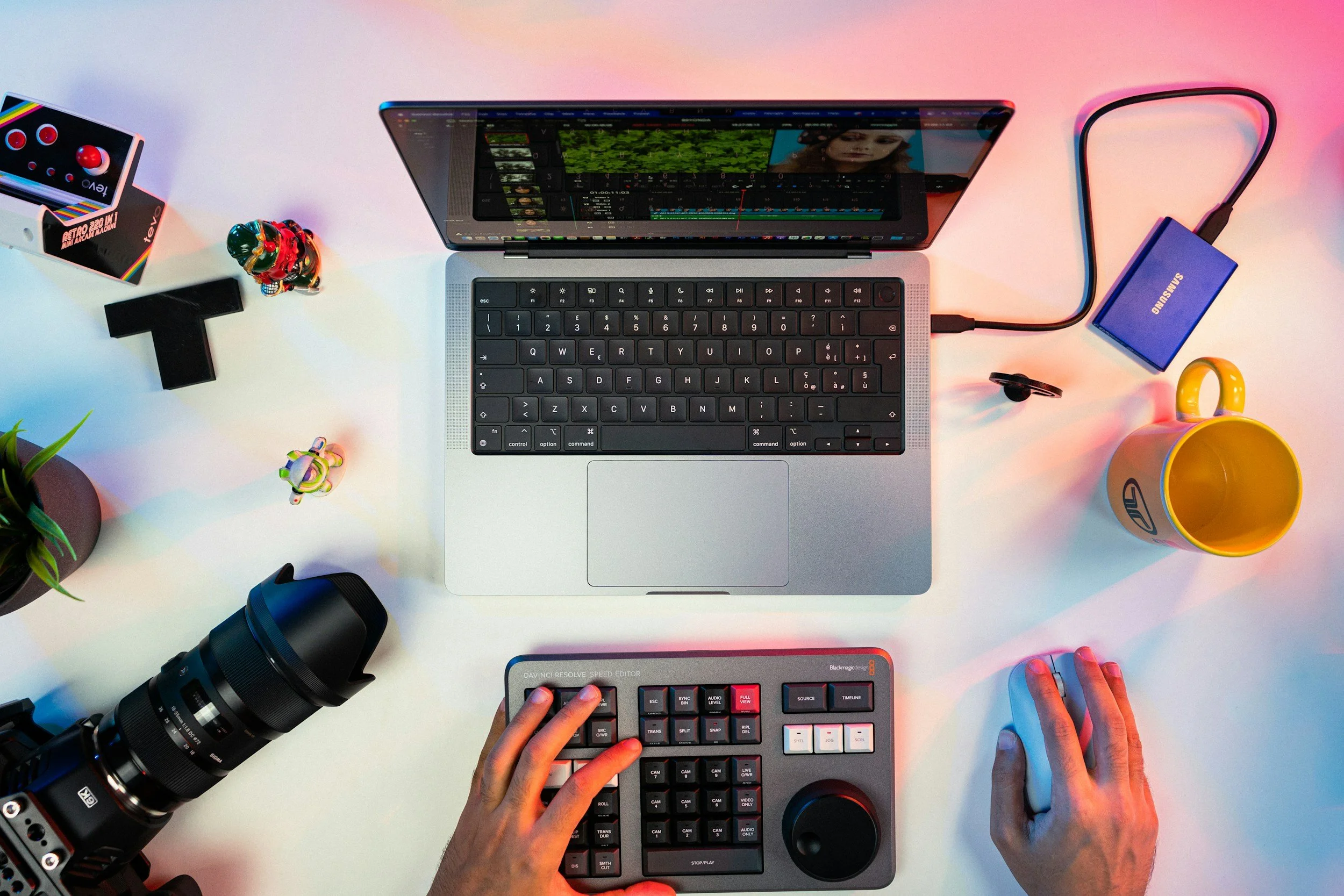
Creator Economy
n. — /krēˈādər ēˈkänəmē/
The business ecosystem in which individuals use content, audience attention, and digital platforms to build influence and generate income.
Diverge helps artists, creators, and influencers protect their work, negotiate smarter, and build their business without giving up control of the value they create.
What it means to be “creator”
A creator is anyone who makes and publishes content for an audience, usually on social media, video platforms, newsletters, podcasts, or membership sites. Some creators post to educate, some to entertain, some to sell, and many do all three at once.
What matters is that their content has an audience and a purpose beyond casual sharing.
The “economy” part matters because this is not just about posting online for fun. It is about a real business model built around content, community, influence, and distribution.
In that model, attention becomes a business asset, and the content itself can become part of a larger brand.
Types of creators
Not all creators post with the same intent. Some are educators, using content to teach and build authority. Others are entertainers, focused on personality, humor, or storytelling. Some are reviewers or commentators, using opinions to shape decisions or public conversation. Others are founders or builders, using content to support a product, service, or business.
Intent matters because it affects everything from audience expectations to monetization strategy. A creator who teaches may attract sponsorships, courses, or consulting. A creator who entertains may lean toward brand deals, merch, live events, or licensing. A creator who builds a business may use content as a top-of-funnel marketing tool.
Core distinctions
Artist: Someone whose primary output is creative expression. The focus is usually on craft, originality, and the work itself, such as music, visual art, performance, writing, or film.
Creator: A broader term for anyone who produces content for an audience. This can include artists, educators, entertainers, reviewers, podcasters, streamers, and founders who post online.
Influencer: Someone whose main value is audience influence. The emphasis is less on the content format itself and more on the ability to shape opinions, trends, or purchasing decisions.
Talent: A wider industry term often used for people whose public-facing identity has commercial value, including artists, creators, influencers, performers, and hosts.
Digital brand / personality-led brand: A person or persona built into a business asset. This is often used when someone’s face, voice, style, or name is part of the commercial offering.
Simple way to think about it:
An artist creates work primarily for expression.
A creator makes content for an audience.
An influencer uses that audience to drive attention or action.
A person can be all three at once.
For example, a musician is often an artist. If they post behind-the-scenes content, tutorials, and short-form videos, they are also acting as a creator. If their posts regularly drive product sales or brand behaviour, they are functioning as an influencer too.
Why the distinction matters
The label affects how people think about your business model, your audience, and your legal risk.
An artist may care most about ownership and control over the work, while an influencer may face more issues around endorsements, disclosure, and brand deal terms. A creator who monetizes across multiple formats usually needs protection around licensing, usage rights, and platform rules.
For Diverge, these categories matter because they all sit inside the broader creator economy, but they do not have the same commercial profile. A creator-led business, an artist brand, and an influencer campaign may look similar on the surface, yet the contract, IP, and monetization issues can be very different.
Main players in the Creator Economy
The creator economy usually involves a few core players:
Creators. Individuals or teams making content, building community, and monetizing their audience.
Platforms. Social networks, streaming services, podcast apps, newsletters, and marketplaces that distribute content.
Brands. Companies that pay for sponsorships, partnerships, or product promotion.
Agencies and managers. People who help creators grow, negotiate, and manage business opportunities.
Lawyers and advisors. Professionals who help protect rights, structure deals, and reduce risk.
Each player has a different goal. Creators want reach and revenue, platforms want engagement and retention, brands want credibility and conversion, and advisors help make the business sustainable.
How creators make money
Creators can monetize in many ways, and most successful creators use more than one stream. At a basic level, the content builds an audience first, and then that audience becomes the asset that supports revenue.
Main Revenue Streams:
Brand partnerships and sponsorships. A company pays the creator to feature a product, service, or message.
Affiliate marketing. The creator earns a commission when a follower buys through a tracked link or code.
Ad revenue. Some platforms pay creators through ads, views, subscriptions, or bonus programs.
Subscriptions and memberships. Fans pay for exclusive content, community access, or premium updates.
Digital products, courses, and templates. E-books, templates, presets, courses, and guides can be sold repeatedly with low overhead.
Merchandise. Branded physical goods can turn audience loyalty into direct sales.
Events and services. Some creators monetize through consulting, coaching, speaking, or freelance work.
Licensing and syndication. Content, images, clips, music, or likeness rights may be licensed to brands, publishers, or platforms.
How their business works
A content creator does not usually make money from one post alone. The real value comes from trust, consistency, and a repeatable audience relationship. That is why creators often treat content as the top of a funnel: it attracts attention, which then leads to income through products, partnerships, or services.
Different creators earn in different ways depending on their niche and audience intent. An educator may do well with courses and memberships, while an entertainer may earn more from sponsorships, merch, and live events. A creator who also runs a business may use content primarily to generate leads and sales.
The important thing is that content is often the entry point, not the end goal.
In many cases, the content builds trust first, and the revenue comes later.
Creativity vs. revenue
This part of the creator economy matters because revenue usually depends on more than creativity.
It depends on ownership, platform stability, and deal terms that determine who controls the content and how it can be used. That is why creators should think about money, rights, and strategy together rather than separately.
For Diverge, this is where the legal side becomes practical.
We help creators structure the business behind the content so they can grow revenue without giving away more rights than necessary.
Rights, rules, and AI
Ownership
One of the biggest issues in the creator economy is ownership. Ownership matters because creators often assume they own everything they post.
But even though creators may make the content, that does not always mean they keep every right to it. Contracts, platform terms, and brand deal language can affect who can use the content, how long it can be used, and where it can appear.
For example, a post, video, photo, or clip may be created by the creator, yet still be licensed broadly to a brand or platform. For creators, knowing who controls the content is essential to understanding how far it can be reused, repurposed, or monetized.
Platform rules
Platform policies are an important factor that are often not considered. But they matter because creators usually build their audience on channels they do not own. Since creators are operating on systems they do not control, a sudden policy change, de-monetization, takedown, or algorithm shift can affect reach and revenue overnight.
In practical terms, the platform is often the distribution engine, but it is not a stable foundation unless creators know the rules that govern it. That is why creators need to understand both the business upside and the legal limits of the platforms they rely on.
AI and synthetic content
AI has added a new layer to the creator economy. Creators now have tools that can help draft scripts, edit video, localize content, and scale production. This can help speed up creation, but it also raises new questions about originality, authenticity, consent, ownership, and control.
Synthetic twins and digital replicas make those questions even more personal. If a creator’s face, voice, likeness, or style can be copied or simulated, it becomes essential to protect the value of their personal brand.
The key idea is simple: the more a creator’s identity is tied to their business, the more they need to think about who can use that identity and under what terms.
As AI becomes part of everyday content production, creators need to think carefully about what they are creating, what they are granting away, and what others may be able to reproduce.
Protect what you build
The creator economy is not just about followers. It’s about building a durable business around content, reputation, and rights. That means creators need more than growth strategies; they need smart legal and commercial foundations too.
Diverge Legal helps creators, brands, and businesses navigate the rules behind the business of content. We focus on helping clients protect what they create, structure smarter deals, and build with confidence in a fast-moving digital world.
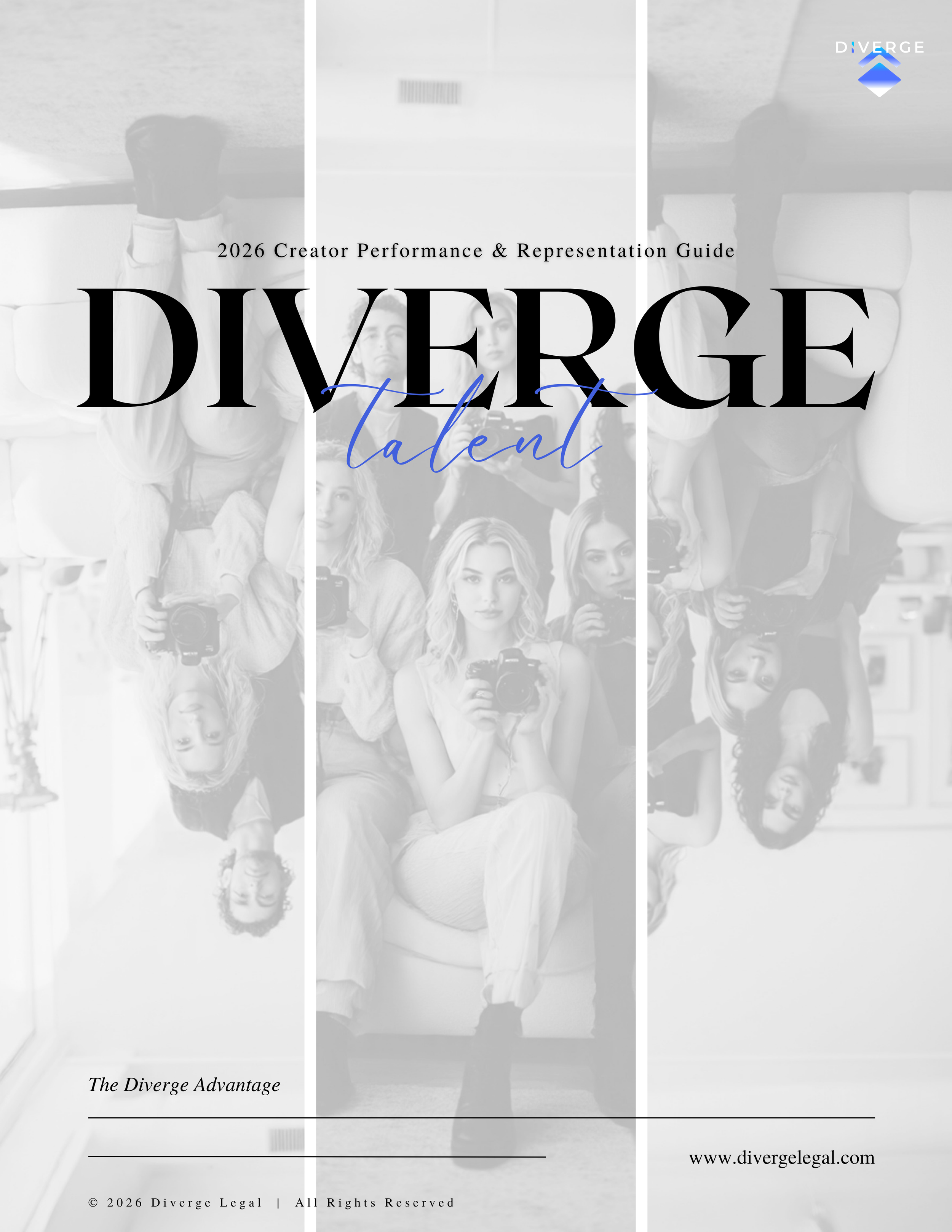
Everything you need to know about The Diverge Advantage. Understand your agreements. Protect your IP. Build your career. Own your future.
Free Resource
Want to know how it works?
Download our creator guide for free!
Need help understanding the intricate contracts that govern your creative work, or want to build a strategy for IP protection? Diverge Legal is here to help!
If you’re ready for representation that understands the difference between a data point and your dream, contact us.
Read these next




More about DIVERGE
Diverge is not just a legal service provider. We’re your partner in building a legally sound and sustainable content creation business. We understand the unique challenges creators face and offer tailored solutions to protect your intellectual property, ensure regulatory compliance, and minimize legal risks.
Whether you’re an established influencer or an emerging creator, Diverge is here to help you focus on what you do best, while we take care of the legal complexities.
Reach out to Diverge today to learn more about how we can support your content creation journey.
Follow @diverge.legal on social media or subscribe to our newsletter below for more tips on protecting your creative rights and thriving in the creator economy.
Important Notice: The information in this article is provided for general informational purposes only and is not intended as legal advice. Reading this content does not create a lawyer-client relationship. Always seek professional legal counsel tailored to your specific situation. No part of this article may be reproduced or transmitted, in any form or by any means, electronic, mechanical, photocopying, recording or otherwise, or stored in any retrieval system of any nature, without the express written permission of Diverge Legal.
