
7-Eleven v. Nike: What sneakers say about trademarks and brand identity
TORONTO, ON –
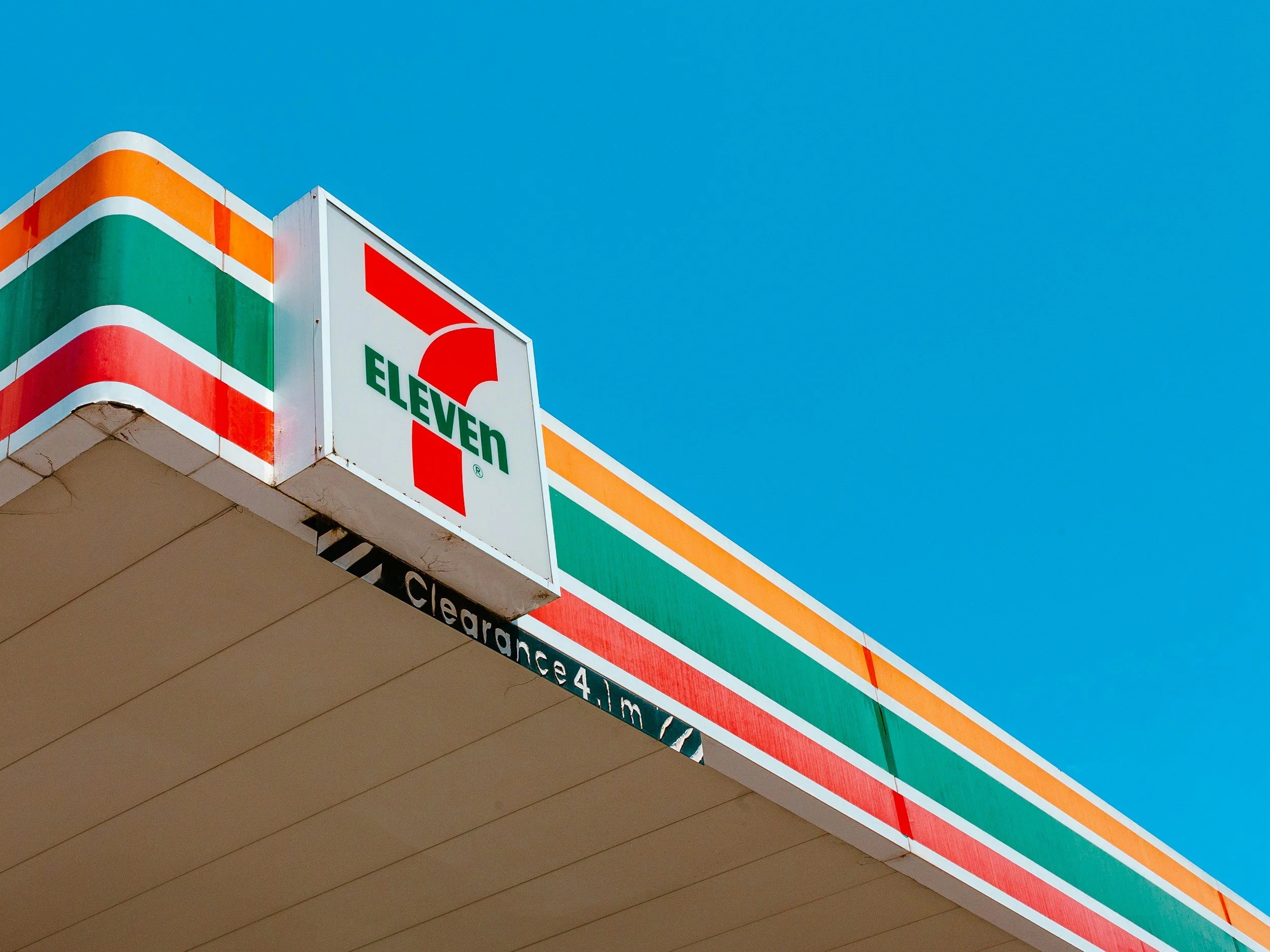
7-Eleven has sued Nike over an upcoming Air Max 95 release alleging the sneaker uses 7-Eleven’s signature orange, green, and red stripe branding. No logo. No wordmark. No collab.
This dispute is a unique case study in trademark law, trade dress, and the risks of leaning too hard into another brand’s identity. For creators and entrepreneurs whose brands are built on aesthetics, social media visibility, and fast-moving product launches, it’s a good reminder that brand protection goes well beyond logos and names.
Trade dress
n. — /trād dres/
The overall appearance of a product or brand presentation when that appearance identifies source.
Diverge helps artists, creators, and influencers protect their work, negotiate smarter, and build their business without giving up control of the value they create.
Most people think of trademarks as names and logos. In practice, brand rights can be much broader. Trademark law can also protect other features that identify a source.
Colours, patterns, product design, packaging, and the overall look and feel of a product can all become legally significant if consumers associate those features with a particular source, even when no exact word mark appears on the product itself.
For brands and creators, that is the key lesson: trademark risk often lives in the full presentation, not just in one visible element.
What 7-Eleven is arguing
This lawsuit is about much more than a sneaker with a few bold stripes. The colour scheme of the Air Max 95s combined with the sneaker drop falling on July 11—a date 7-Eleven Day has spent year building brand association—and the fact that the sneaker’s insole graphic depicted store shelves and product copy about “strolling down to the corner store,” made the release feel like a direct nod to 7-Eleven’s brand.
A campaign or product can create problems if it is commercially suggestive; in other words, if it suggests a commercial affiliation with another brand. That is why this dispute has drawn attention. The issue isn’t that Nike copied a logo or used the 7-Eleven name. Instead, 7-Eleven is arguing that Nike’s sneaker creates a misleading association that suggests a brand connection or collab that does not exist.
7-Eleven says it approached Nike first in an effort to resolve the issue amicably, only to be told the launch was going ahead anyway. Nike may have felt safe because it is Nike and because it was not obviously copying a registered word mark, but trademark law is not limited to names. If the public sees a product and immediately thinks of another brand, that perception itself can create legal risk, especially where the brand identity has become distinctive enough that the colours are doing the work the logo used to do.
To protect its brand power, 7-Eleven is asking the court to block the sale, recall any existing pairs, and award damages and attorney fees.
How this would play out in Canadian courts:
Although this lawsuit is taking place in the United States, the legal concept is very similar to Canadian trademark practice. Under Canada’s Trademarks Act, the key questions would be:
whether the sneaker’s colour scheme and overall presentation created a misleading commercial impression,
whether the public would likely associate that look with 7-Eleven specifically, and
whether Nike’s adoption was innocent or opportunistic.
Canadian law recognizes that brand protection can extend beyond word marks, especially where a business is trying to protect distinctive visual identity or prevent passing off. But 7-Eleven would need to show that consumers actually link that orange, red, and green combination with its brand, not just that it was the first to use those colours.
If 7-Eleven had a registered mark covering the relevant brand feature, depreciation of goodwill under section 22 of the Trademarks Act would question brand or market dilution: did Nike’s use, without due cause, take unfair advantage of or harm the distinctiveness or goodwill attached to a registered mark? Conversely, a claim for passing off under section 7(b) of the Act would focus on whether the design created confusion or a false sense of connection.
On these facts, a court would likely look past the individual elements and ask whether the overall commercial impression — the colours, store-shelf imagery, corner-store language, and July 11 timing — made the adoption look deliberate rather than accidental.
Trade dress and colour branding
Trade dress protects the overall visual appearance of a product or brand presentation when that appearance identifies source.
Colour is generally treated as inherently non-distinctive in Canada. But even though a brand may not own a colour in the abstract, it may be able to protect a distinctive combination of design features if the public associates them strongly with that brand. The stronger that association is in the minds of the public, the stronger the legal argument becomes.
Many modern brands are built less on traditional advertising and more on visual identity, cultural reference points, limited drops, and social-first presentation. A product tied to a well-known date, event, or significant moment can appear more suspicious if the surrounding context points to opportunism. This type of dispute is a useful reminder that “inspired by” is not a legal defence on its own. That risk becomes greater when a creator or brand is intentionally leaning into a cultural reference.
For creator-led brands, colour schemes, packaging, photo direction, styling, content themes, launch dates, and the way a product is framed on social media are all commercially relevant. For consumer-facing brands, a merch drop, fashion line, beverage or beauty product, or collaboration can all raise questions if it appears to borrow from another brand’s visual identity, even without copying a logo or name. Courts often look at the overall impression, not just whether there was a literal reproduction of a trademark.
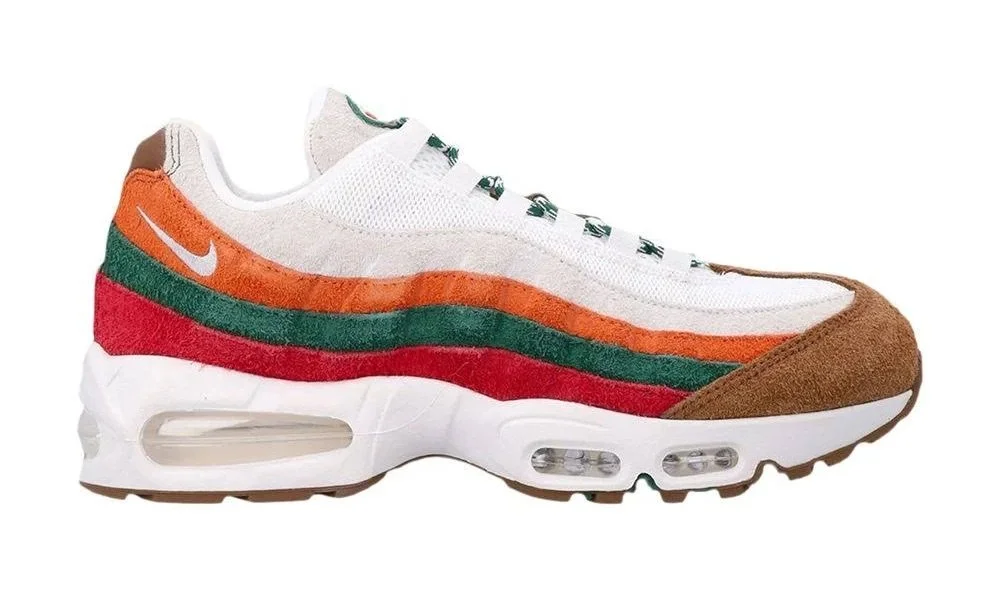
Exhibit for 7-Eleven, Inc. v. Nike, Inc., U.S. District Court for the Northern District of Texas.
For this reason, creators and businesses cannot assume that staying away from a brand’s exact name or logo is enough. If your brand is likely to make consumers think you are connected to someone else, or cause brand confusion among the public, that could be enough to get you in trouble.
That makes design choices commercially powerful—and legally sensitive. A launch can be memorable for the wrong reasons if it crosses from inspiration into brand confusion.
The commercial reality
The underlying legal issues are highly relevant for brands, agencies, creators, and digital businesses that rely on visual identity, product presentation, and brand recognition, such as companies in fashion, beauty, entertainment, and consumer products.
In the creator economy, visual identity drives attention. In a market where launches are often designed to be reactive, public attention can amplify legal disputes just as much as it amplifies marketing campaigns. In other words, if your visual identity is distinctive enough to be memorable, it may also be distinctive enough to attract scrutiny.
The more sophisticated branding becomes, the more important it is to understand the legal boundaries around it.
That is why it’s more important than ever to run colour schemes, product design, styling, timing, and launch context through legal clearance, rather than focus on marketing in isolation. A release that seems clever from a marketing perspective may still be risky from a legal one if it trades too heavily on another brand’s identity. In practice, that means brand teams need to think not only about originality, but about association. This type of careful planning requires meaningful collaboration between a brand’s internal marketing and legal teams, and early legal integration to avoid wasting resources on an infringing product or campaign.
This is especially important for creators and entrepreneurs whose brands are built on aesthetics, social media visibility, and fast-moving product launches.
Limited drops, trend-based merch, seasonal content, and rapid-turnaround collaborations are now common. But the faster the cycle, the easier it is to overlook rights clearance issues before a campaign goes live. A few hours of legal review and clearance can save you from a time-consuming and costly dispute down the line. In most cases, it’s much more efficient to redesign early rather than defend later.
This is especially true for creators and online brands because they often move faster than traditional companies. But sometimes it’s worth slowing down to do things the right way.
Final takeaways from Diverge
Modern trademark law is not limited to traditional marks like names and logos. What matters most is consumer perception. If the overall presentation of a brand or product points too clearly to another business, then you’ve likely entered infringing territory—even if the exact name is absent.
For Diverge Legal clients, the practical lesson is not to avoid strong branding; it’s to build your brand with intention. If your business depends on being instantly recognizable, make sure that your brand’s identity comes from your own assets, not someone else’s.
Diverge Legal helps creators, brands, and businesses navigate the rules behind the business of content. We focus on helping clients protect what they create, structure smarter deals, and build with confidence in a fast-moving digital world.
If you’re ready for representation that understands the difference between a data point and your dream, contact us.
Read these next






More about DIVERGE
Diverge is not just a legal service provider. We’re your partner in building a legally sound and sustainable content creation business. We understand the unique challenges creators face and offer tailored solutions to protect your intellectual property, ensure regulatory compliance, and minimize legal risks.
Whether you’re an established influencer or an emerging creator, Diverge is here to help you focus on what you do best, while we take care of the legal complexities.
Reach out to Diverge today to learn more about how we can support your content creation journey.
Follow @diverge.legal on social media or subscribe to our newsletter below for more tips on protecting your creative rights and thriving in the creator economy.
Important Notice: The information in this article is provided for general informational purposes only and is not intended as legal advice. Reading this content does not create a lawyer-client relationship. Always seek professional legal counsel tailored to your specific situation. No part of this article may be reproduced or transmitted, in any form or by any means, electronic, mechanical, photocopying, recording or otherwise, or stored in any retrieval system of any nature, without the express written permission of Diverge Legal.
