
Your Voice, Your Face, Your Rights
TORONTO, ON –
How Canadian Law Protects Voice, Image, and Likeness in the AI Era
AI has made it easier than ever to copy a person's face, mimic a voice, and circulate fake endorsements or fabricated content at scale.
For Canadian creators, artists, influencers, executives, and talent-led brands, the legal question is no longer theoretical: what protection actually exists when someone uses your likeness or voice without permission?
The short answer is that Canada does offer protection, but not through one clean statute.
Unlike the United States, which has a well-developed right of publicity in many states, Canada has no single, unified legal right covering voice and likeness. Instead, creators must rely on a patchwork of common law torts, provincial privacy legislation, trademark law, and federal privacy obligations that can work together, though each comes with real limitations. It's messier than a single statute, but taken together, these avenues can provide meaningful recourse, provided you understand where the coverage ends.
If your name, image, voice, or persona carries commercial value, this is a business issue as much as a legal one. You need to understand both where Canadian law helps and where contracts and proactive brand protection have to fill the gaps.
Misappropriation of personality
n. /mɪs-ə-ˌproh-pree-AY-shən əv ˌpər-sə-NAL-ə-tee/
A Canadian common law claim, first recognized in Krouse v. Chrysler Canada Ltd., that addresses the unauthorized commercial use of a person's name, likeness, voice, or persona for another party's advantage.
Why This Matters Now
The AI Threat
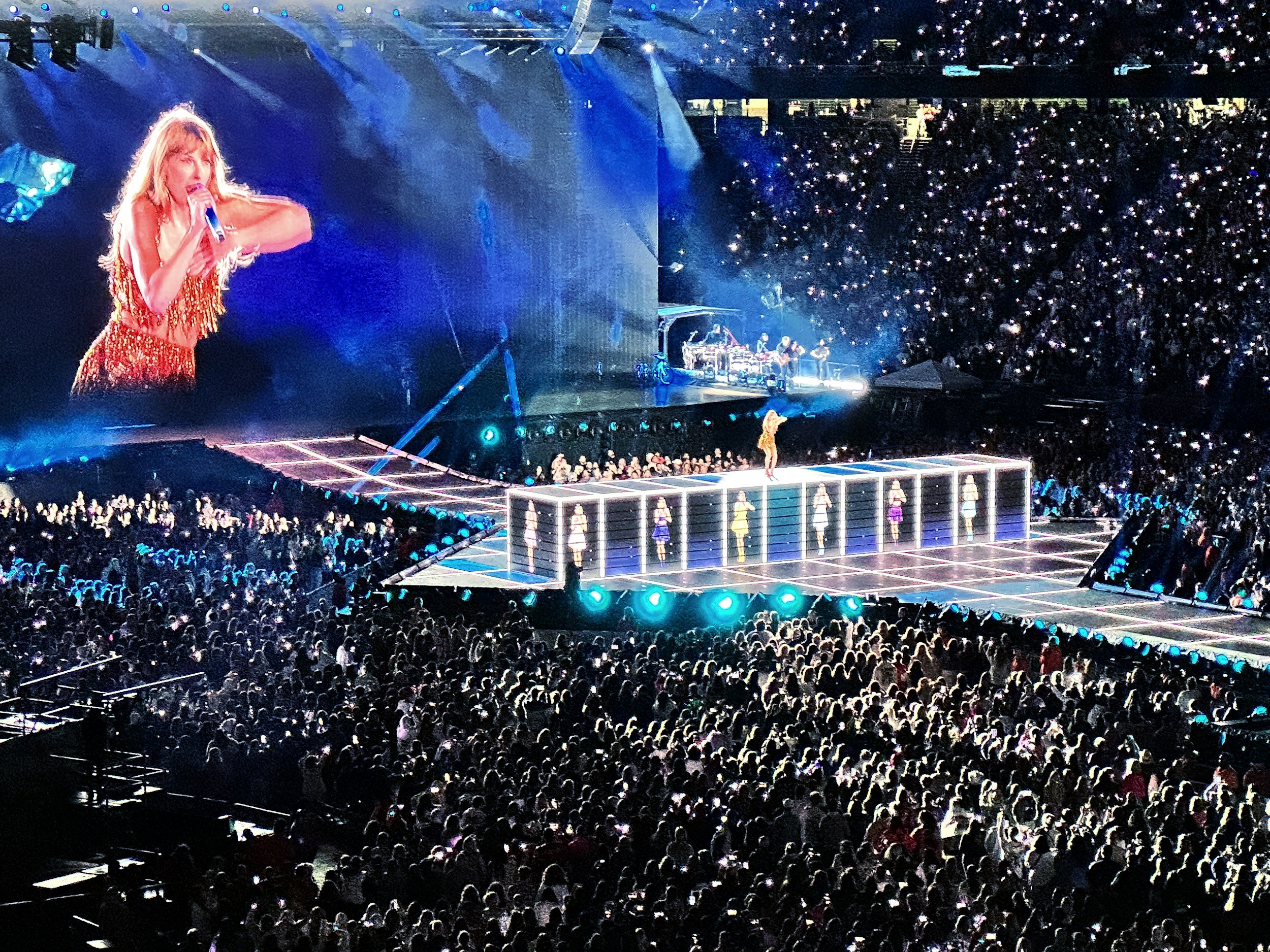
Generative AI tools can now produce convincing synthetic voice clips and photorealistic images from relatively small source samples. The Canadian Internet Policy and Public Interest Clinic (CIPPIC) has pointed out that an AI-generated "Taylor Swift" singing a Carly Rae Jepsen track is now trivially easy to produce, and convincing enough to make listeners hesitate.
The risk is not limited to celebrities. A brand, platform, scammer, fan account, or bad actor can create content that appears to come from a real person even when that person never recorded, approved, or endorsed it. A cloned voice can end up in a fake ad, a fabricated apology, a misleading brand endorsement, or a manipulated campaign asset that damages audience trust. A synthetic likeness can create privacy harm, reputational harm, and lost licensing value all at once, especially for creators and public-facing professionals whose identity is a core part of what they sell.
No Single Right of Publicity
Because Canada has no unified national right of publicity, protection is fragmented across provinces and legal doctrines. The available claim can depend on where the misuse happened, where the claimant lives, and exactly what was taken or implied.
That does not mean Canadian law is empty. It means claimants often need to combine multiple theories: misappropriation of personality, statutory privacy claims, false light, passing off, trademark infringement, copyright in source materials, and privacy complaints where personal information was collected or used without proper consent.
Misappropriation of Personality
For most Canadian claimants, the most relevant doctrine is the tort of misappropriation of personality, triggered when someone uses a person's name, image, likeness, or voice for commercial gain without consent. The doctrine traces back to Krouse v. Chrysler Canada Ltd., where the Ontario Court of Appeal recognized that Canadian law provides "a remedy for the appropriation for commercial purposes of another's likeness, voice, or personality." It's worth noting that Krouse himself lost: the court found Chrysler's marketing materials referenced the CFL brand generally rather than Krouse specifically, and the imagery didn't imply his personal endorsement. The tort exists, but claimants still have to prove their identity, not just a general association, was appropriated.
This tort matters most for talent, creators, athletes, and founders whose public identity is tied to revenue. When a company runs a lookalike campaign, a soundalike performance, or a synthetic clone that suggests endorsement or affiliation, the core legal complaint is that it appropriated identity-based value without permission.
The catch is that Canadian courts have historically anchored this tort to proof of commercial exploitation.
That creates a real gap in the AI era: if a cloned voice goes viral on a non-monetized platform without the infringer directly profiting, the traditional test may not be satisfied, even though the creator has clearly lost control of, and value in, their own identity. Legal commentators have argued the doctrine needs to expand to capture any advantage derived from misappropriation, commercial or not, given that virality itself is a form of gain.
Canadian courts have yet to confront a true AI voice-cloning case, but the legal architecture is ready to be tested.
Provincial Privacy Statutes
In some provinces, statutory privacy law offers a stronger and more direct route than the common law. British Columbia, Saskatchewan, Manitoba, and Newfoundland and Labrador each have privacy legislation that creates a statutory tort for violation of privacy, explicitly covering unauthorized use of a person's name, likeness, or voice for commercial or other exploitative purposes, and in most cases without requiring proof of damage.
Manitoba's Privacy Act is a useful illustration: it specifically identifies unauthorized use of "the name or likeness or voice" of a person for advertising, promotion, or gain as an actionable tort. That statutory wording is more direct than anything available under the common law.
Ontario and Alberta, by contrast, rely on common law claims that are narrower and less predictable in application. For creators based in these provinces, that gap is exactly why contractual protections, discussed below, carry more weight than they would elsewhere in Canada.
The Tort of False Light
Recognized in Ontario and British Columbia, the tort of false light protects against publicly misrepresenting someone in a way a reasonable person would find highly offensive. Unlike defamation, false light does not require the misrepresentation to harm reputation in the conventional sense; it captures the wrong of representing someone as other than they are.
An AI-generated video or audio clip that shows a creator endorsing a product, making a controversial statement, or performing in a context they never approved fits squarely into this framework. Depending on the facts, defamation, intrusion upon seclusion, or intentional infliction of mental suffering may also be available, though those claims target different harms and are not always a clean fit for commercial misuse cases.
Trademark: Fencing Off Your Brand Signals
Trademark law does not protect a person's entire identity, but it can protect the specific, distinctive identifiers that audiences associate with a commercial source. In Canada, sound marks became registrable under the federal Trademarks Act following a 2012 Federal Court decision that allowed Metro-Goldwyn-Mayer to register the MGM lion's roar.
For a creator with a recognizable intro, a distinct audio tag, a recurring catchphrase, a show title, or a signature character, registering that element as a trademark in Canada, and potentially internationally through the Madrid System, creates enforceable protection around core brand signals. This tool is most useful where misuse creates confusion about endorsement, sponsorship, or official association; it will not stop someone from imitating your voice in a purely non-commercial context.
Privacy Law: PIPEDA and the Regulatory Signal
Where AI misuse involves the collection or use of biometric-style data, voice recordings, or facial images, Canada's federal Personal Information Protection and Electronic Documents Act (PIPEDA) and provincial equivalents may also be engaged, particularly where a platform or company collected and used that data without meaningful, valid consent.
The Office of the Privacy Commissioner of Canada has already shown it will treat this as a live compliance issue, not just a private tort matter. In January 2026, Commissioner Philippe Dufresne opened an investigation into X Corp. and xAI over Grok's image generation tool being used to create non-consensual sexualized deepfakes
On June 11, 2026, the Commissioner released his findings: both companies were found to have violated Canada's federal private sector privacy law by launching the tool without adequate safeguards at the outset, at a point when Grok was generating more than 6,000 sexual deepfake images per hour. That outcome, a completed finding of an actual privacy law violation tied directly to AI-generated likeness misuse, is a strong signal that regulators are willing to hold AI companies and platforms accountable for unauthorized use of Canadians' voices and faces, independent of whether a civil tort claim succeeds.
Where Canadian Law Is Still Weak
Canada's legal framework offers meaningful tools: provincial privacy statutes, misappropriation of personality, false light, trademark law, and PIPEDA. But those tools were built for a different era, largely around conventional ads, photographs, and human impersonators, not automated systems capable of generating thousands of realistic outputs in minutes.
That mismatch creates several practical gaps:
Harmful content can spread widely before a claimant can identify its source or secure an injunction.
Some claims still turn too heavily on proof of commercial gain, leaving non-monetized but still damaging misuse under-protected.
Jurisdiction gets messy fast when tools, platforms, users, and audiences are spread across borders.
Existing doctrine doesn't map neatly onto voice cloning where no exact recording was copied, but the output still evokes the person unmistakably.
For public-facing brands and talent, the legal baseline is useful, but incomplete. Protection has to be designed, not assumed, and those tools only work if you've taken steps to establish your rights before the misuse happens.
Understanding these gaps is the first step — the next is knowing what to actually do about them.
The Practical Takeaway
Canadian law does protect voice and likeness, but indirectly and unevenly. The strongest current options come from combining misappropriation of personality, statutory privacy rights in certain provinces, false light or defamation-based claims where content is misleading, trademark protection for core brand identifiers, and privacy law where personal information is used without valid consent.
For Canadian creators, talent, entrepreneurs, and brands, the lesson is straightforward: identity is now an asset class. In a market where your image and voice can be copied, remixed, and commercialized faster than ever, protecting that asset takes more than hoping the law catches up on its own. It takes proactive registration, carefully drafted contracts, and a monitoring plan built before you need one.
Canada's legal framework offers meaningful tools: provincial privacy statutes, the common law torts, trademark legislation, and PIPEDA. But those tools are more effective if you have taken steps to establish your rights and protect your assets before the misuse occurs.
Read these next




More about DIVERGE
Diverge is not just a legal service provider. We’re your partner in building a legally sound and sustainable content creation business. We understand the unique challenges creators face and offer tailored solutions to protect your intellectual property, ensure regulatory compliance, and minimize legal risks.
Whether you’re an established influencer or an emerging creator, Diverge is here to help you focus on what you do best, while we take care of the legal complexities.
Reach out to Diverge today to learn more about how we can support your content creation journey.
Follow @diverge.legal on social media or subscribe to our newsletter below for more tips on protecting your creative rights and thriving in the creator economy.
Important Notice: The information in this article is provided for general informational purposes only and is not intended as legal advice. Reading this content does not create a lawyer-client relationship. Always seek professional legal counsel tailored to your specific situation. No part of this article may be reproduced or transmitted, in any form or by any means, electronic, mechanical, photocopying, recording or otherwise, or stored in any retrieval system of any nature, without the express written permission of Diverge Legal.
