
The Viral Concert Clip: Guide to Live Performance Copyright
TORONTO, ON –
Your favourite artist is on stage, the light show is incredible, the crowd is electric, and your smartphone camera is ready to capture it all. You capture the perfect 30-second clip and, within minutes, it's published to YouTube, TikTok, or Instagram, racking up thousands of views.
But what if that clip (and the views it generates) comes with a hidden legal price tag?
For content creators, social media influencers, and even casual concert-goers in Toronto, Ontario, or anywhere in Canada, understanding the copyright implications of recording and publishing live performance footage is important. While the venue might allow you to film, the law draws a clear line between personal use and unauthorized communication to the public.
At Diverge Legal, we specialize in helping creators navigate the complex intersection of entertainment, social media, and intellectual property. Here is your essential guide to the legal landmines in that viral concert clip.
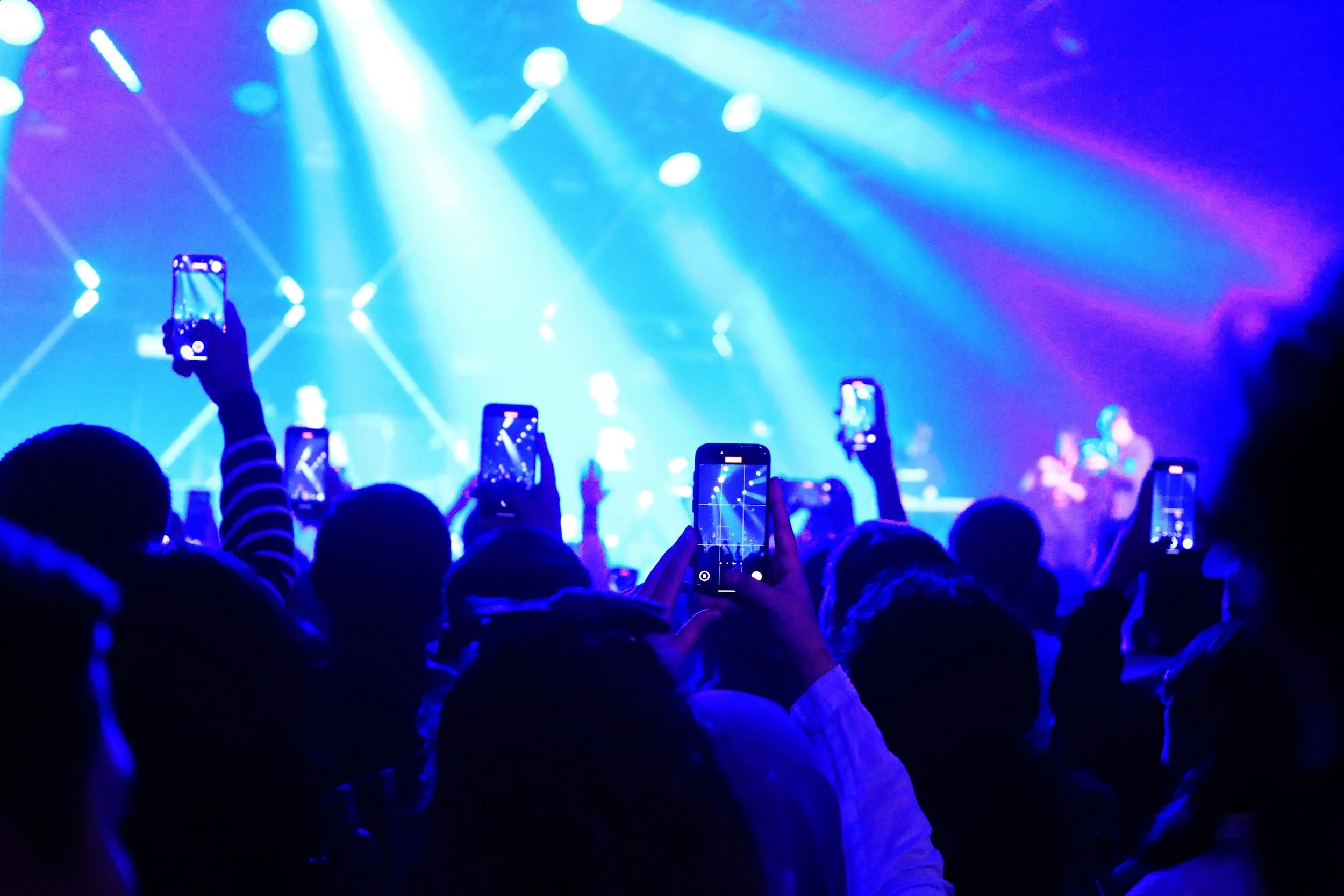
Bootlegging
/ˈbuːtˈlɛɡɪŋ/ (v.)
The unauthorized recording and/or distribution of a live artistic performance, such as posting a concert clip to social media.1. The Complex Layers of Copyright in a Live Concert
A live concert is not covered by a single copyright; it is a stack of various legal protections. When you record a performance, you are potentially infringing upon several layers of copyright simultaneously under the Canadian Copyright Act:
Musical Work Copyright (The Song Itself): This protects the lyrics and melody. This is typically owned by the songwriter and their publisher.
Performer's Performance Copyright: This protects the specific, live delivery of the song by the artist on stage. In Canada, the performer is the first owner of this copyright.
Sound Recording Copyright (Pre-Recorded Tracks): If the artist uses any pre-recorded audio (like backing tracks, intros, or samples), the maker of that recording (often the record label) owns the copyright in that specific sound wave.
Artistic/Dramatic Works Copyright: This protects the visual elements, such as the choreography, set designs, images shown on screens, or costumes.
When you film the performance, you are creating an unauthorized reproduction and then, by posting it online, you are communicating a substantial part of these copyrighted works to the public, which is an exclusive right reserved for the copyright owners.
2. The Permission Paradox: Venue Policy vs. Copyright Law
There is a crucial distinction every creator must understand:
Venue/Promoter Permission (The Contract): Concert promoters, such as the one for Taylor Swift's Eras Tour in Australia, may explicitly state that taking photos or videos on small handheld cameras and smartphones is permitted. This permission removes the risk of copyright infringement for the act of recording itself. However, this is an authorization, not a blanket clearance for commercial use.
Copyright Law (The Distribution): Even if the venue permits you to record, publishing that recording on YouTube or social media, particularly if your channel is monetized (or for commercial purposes), can still constitute an infringement of the various copyrights involved, especially the performer’s and publisher's rights.
Unless the artist or promoter explicitly gives permission for commercial online distribution and public performance (which is rare), you are taking a legal risk the moment you hit “upload.”
3. The Canadian Exception: Does “Fair Dealing” Save You?
In Canada, unlike the broader “Fair Use” doctrine in the United States, we operate under the limited “Fair Dealing” exception in the Copyright Act.
To qualify as Fair Dealing, your use must be for one of eight specific purposes and also be “fair”:
Research
Private Study
Criticism
Review
News Reporting
Education
Parody
Satire
Does a 30-second TikTok clip of the chorus count?
Probably Not for Commercial Channels: If your primary goal is generating views, attracting followers, or earning ad revenue from a monetized channel, then your use is likely commercial. This works against a finding of “fairness,” as your content could compete with the official content (like a concert film or official music video).
The Non-Commercial User-Generated Content (UGC) Exception: The Copyright Act includes an exception (s. 29.21) that allows for the use of copyrighted works to create a new, unique work for non-commercial purposes, provided you credit the source and the use doesn't have a substantial adverse effect on the exploitation of the original work. If you're a monetized creator, arguing your post is truly “non-commercial” is a difficult, if not impossible, barrier to clear.
In short, relying on Fair Dealing to protect a viral concert clip on a commercial social media channel is a very high-risk legal gamble.
4. The Real-World Risk: What Happens When You Get Caught?
While it is true that an individual fan is unlikely to be pursued for a single, non-egregious post, the same leniency is rarely afforded to high-visibility, monetized content creators.
Legal actions demonstrate the risk:
Bad Bunny vs. Fan Lawsuit (U.S. Example): Reggaetón artist Bad Bunny sued a fan who uploaded full song performances from a concert to YouTube, claiming the “unauthorized bootleg” footage harmed the artist's market by diverting viewers from official content. The fan's attempt to use a "newsworthy event" defense was challenged, compelling the artist to pursue formal legal action.
The Takedown Notice: The most immediate and common consequence is a takedown notice (like a DMCA notice in the US) initiated by the artist's publisher or label. Ignoring this can lead to the platform penalizing or even terminating your channel, especially if you get multiple strikes.
5. Your Next Move: Protect Your Content, Know Your Rights
The core lesson for every creator is simple: Do not assume that because something is easy to film, it is legal to publish for profit.
Check the Venue Policy: The rules for recording are part of your contractual terms for entry, but remember, this does not clear the copyright for distribution.
Use It for Personal Memory: Keep the full clip in your phone's camera roll.
Stick to “Micro-Moments”: If you must post, stick to extremely short clips (a few seconds) focused on non-copyrightable elements (like crowd reaction or a transition) or use the footage solely for genuine, high-value criticism or review (a tricky legal area even then).
For content creators and influencers in Toronto and across Canada who rely on their platforms for income, your business is too valuable to risk on a single viral post. Your long-term success hinges not just on creation, but on the meticulous safeguarding and ownership of your intellectual property.
Don't post blindly.
Need help understanding the intricate contracts that govern your creative work, or want to build a strategy for IP protection? Diverge Legal is ready to assist you.
Contact Diverge Legal for a consultation on your creator contracts and IP strategy.
If you’re ready for representation that understands the difference between a data point and your dream, contact Diverge today.
Read these next



More about DIVERGE
Diverge is not just a legal service provider. We’re your partner in building a legally sound and sustainable content creation business. We understand the unique challenges creators face and offer tailored solutions to protect your intellectual property, ensure regulatory compliance, and minimize legal risks.
Whether you’re an established influencer or an emerging creator, Diverge is here to help you focus on what you do best, while we take care of the legal complexities.
Reach out to Diverge today to learn more about how we can support your content creation journey.
Follow @diverge.legal on social media or subscribe to our newsletter below for more tips on protecting your creative rights and thriving in the creator economy.
Important Notice: The information in this article is provided for general informational purposes only and is not intended as legal advice. Reading this content does not create a lawyer-client relationship. Always seek professional legal counsel tailored to your specific situation. No part of this article may be reproduced or transmitted, in any form or by any means, electronic, mechanical, photocopying, recording or otherwise, or stored in any retrieval system of any nature, without the express written permission of Diverge Legal.
